

PRESERVE THE WATER CYCLE
The freshwater cycle is above safe limit
“Green water — terrestrial precipitation, evaporation and soil moisture — is fundamental to Earth system dynamics and is now extensively perturbed by human pressures at continental to planetary scales” Wang-Erlandsson, L., Tobian, A., van der Ent, R.J. et al. A planetary boundary for green water. Nat Rev Earth Environ 3, 380–392 (2022)
In 2009, an international coalition of researchers describe nine planetary boundaries beyond which the planet’s self-regulating processes are irreversibly disrupted and human life as we know it is at risk. Since, those limits have been precised and documented.
In 2022, the sixth limit “freshwater” has been exceeded. It contains two sub-categories:
- Freshwater use (or blue water) is the famous one. One can say : so far, so good
- Green water is less popular but just as crucial for Earth’s health. This causes the safe limit zone excess for the freshwater cycle.
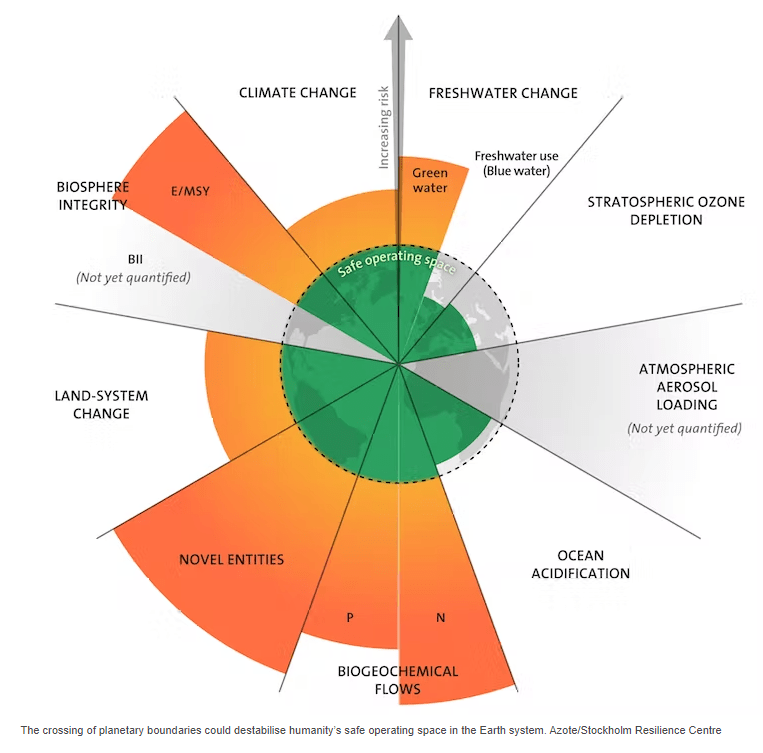
Green water breaching is all the more worrying because soils – and especially wetlands – contain large amounts of carbon. Drying out such areas could release large quantities of greenhouse gases and have severe consequences for the climate.
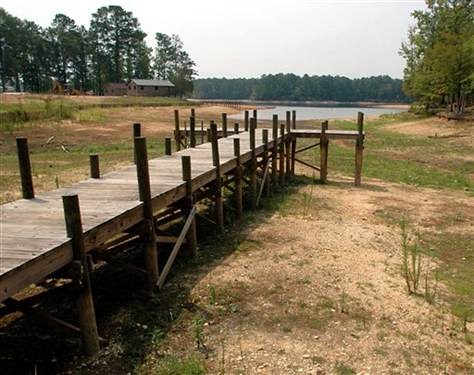
More frequent and severe dry spells mean prolonged and more intense droughts in many regions in the world. Less water limits photosynthesis in plants and thus prevent them to adsorb CO₂ emissions. Even though land counts for 30% of annual CO₂ emissions absorption, it can easily become a net source of CO₂ emissions with no plants growing on it.
The Mediterranean region is at risk : agriculture and irrigation management are at stake
FACTS AND FIGURES
- 40% of the Mediterranean population is in a water shortage situation (MedECC, 2020).
- Nearly 50% of the region’s rivers do not meet the thresholds for good ecological status
- By 2100, 50% of the biodiversity areas will have burnt and 40% of endemic fish species could be extinct.
- Agriculture accounts for 60% of the total quantities of water withdrawn in the region.
- Nearly a third of the countries in the Mediterranean basin consume more phytosanitary products than the world average.
- Impactful irrigation and water management practices are mostly reponsible : nearly 65% of the estimated water savings depend on improved efficiency of irrigated agriculture.
Watch out the rebound effect at the watershed scale !
Instead of increasing water supply, let’s focus on reducing water demand to tackle the risk of rebound effect
Definition: The rebound effect is the reduction in expected gains from new technologies that increase the efficiency of resource use (like water), because of behavioral or other systemic responses. These responses diminish the beneficial effects of the new technology or other measures taken (Grubb, 1990).
Several scientific studies highlighted that adopting more water-efficient technologies lead to an overall increase of water consumption at the watershed level. Both the average quantity used per irrigated surface (so called the extensive margin) and the total irrigated land (so called the intensive margin) increased. Considered as a major risk, the rebound effect will be closely considered when designing technical and financial tools powered by Watershift.
For more information, see our Framing study
Watershift is part of the solution
We are dedicated to reduce water pressures in agriculture sector in water-stressed areas

 Watershift